Where the money leaks in an online store
Almost nobody loses sales because of the design. They are lost on the way between the product and the order confirmation.
A person arrives, finds the product, puts it in the cart, reaches the shipping step and only there learns what delivery costs. Or fills in the whole form and only at the end sees that the chosen size is out of stock. Every surprise like that is an abandoned cart.
That is why the first conversation is not about how it looks, but about what the store has to know and when.
- How many products you have now and how many you want in two years.
- Whether they have variants: sizes, colours, weights. This is where complexity grows most.
- Where you keep the stock and who updates it.
- How you ship, and whether delivery is calculated or fixed.
- What happens after an order: who sees it, who issues the invoice, who tells the customer.
What we connect to what
A store that does not talk to the rest of the company becomes extra work. Someone copies the orders into a spreadsheet, someone else enters them into the invoicing software, and the stock on the site falls a day behind.
We do the integration work in-house, because we have backend as well as design. In practice that means the store can pass the order along by itself, and you see in one place what sold and what is left.
What can be connected depends on what you already use. If your system has a way of talking to the outside, we connect to it. If it does not, we tell you up front, not after we have started.
How we work
We go through the catalogue, the stock, the shipping and what happens after an order. That produces the list of integrations.
How a person finds the product: categories, filters, search. This decides how easy buying is.
The product page and the path to the order, on desktop and on mobile. The rest comes after.
We build the store and connect it to payment, shipping and stock. You watch it live on a private link.
We push real orders through the whole flow, returns included, before anyone sees the store.
We show you how to add products and how to read the orders. Then 30 days of support.
Stores we have built
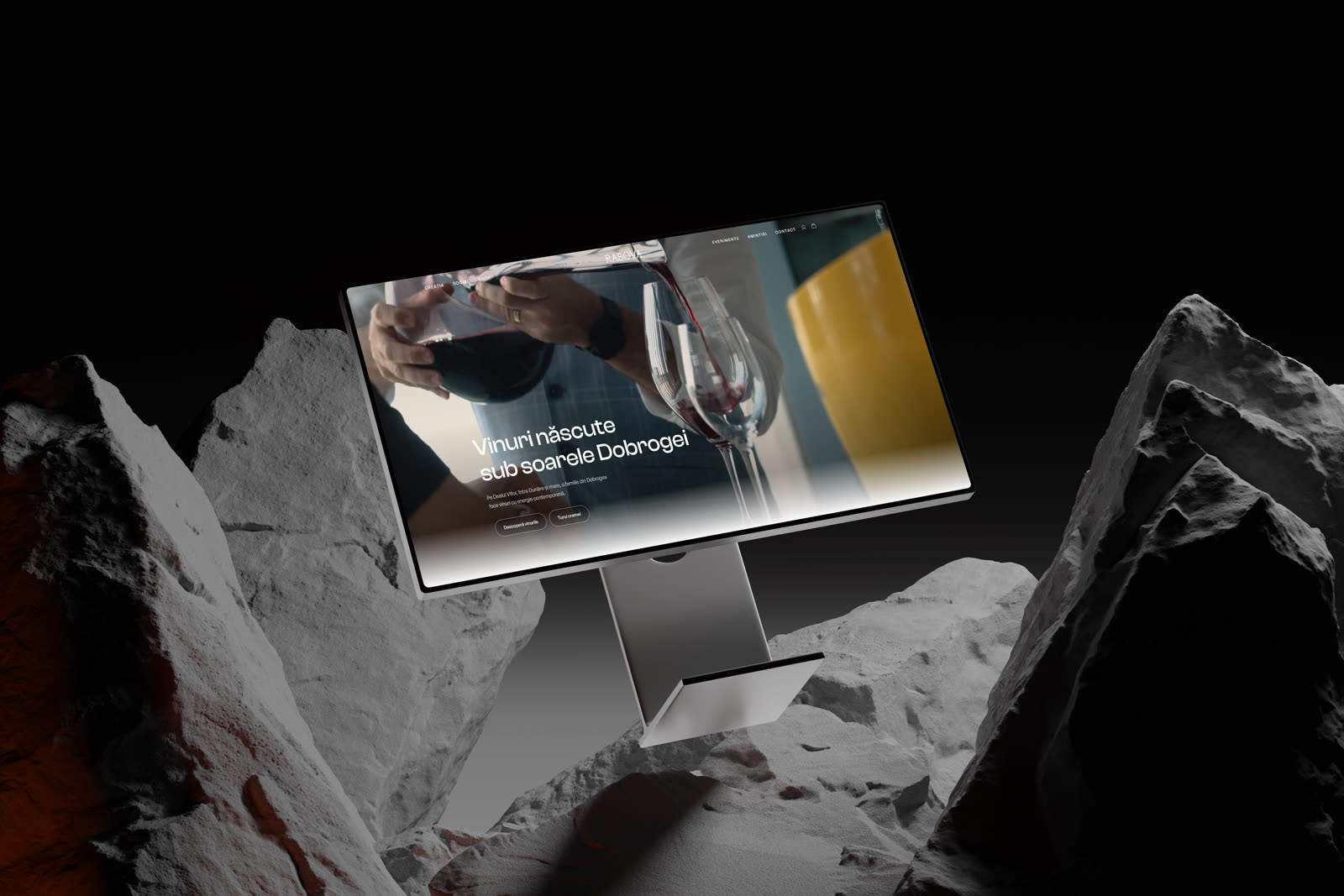
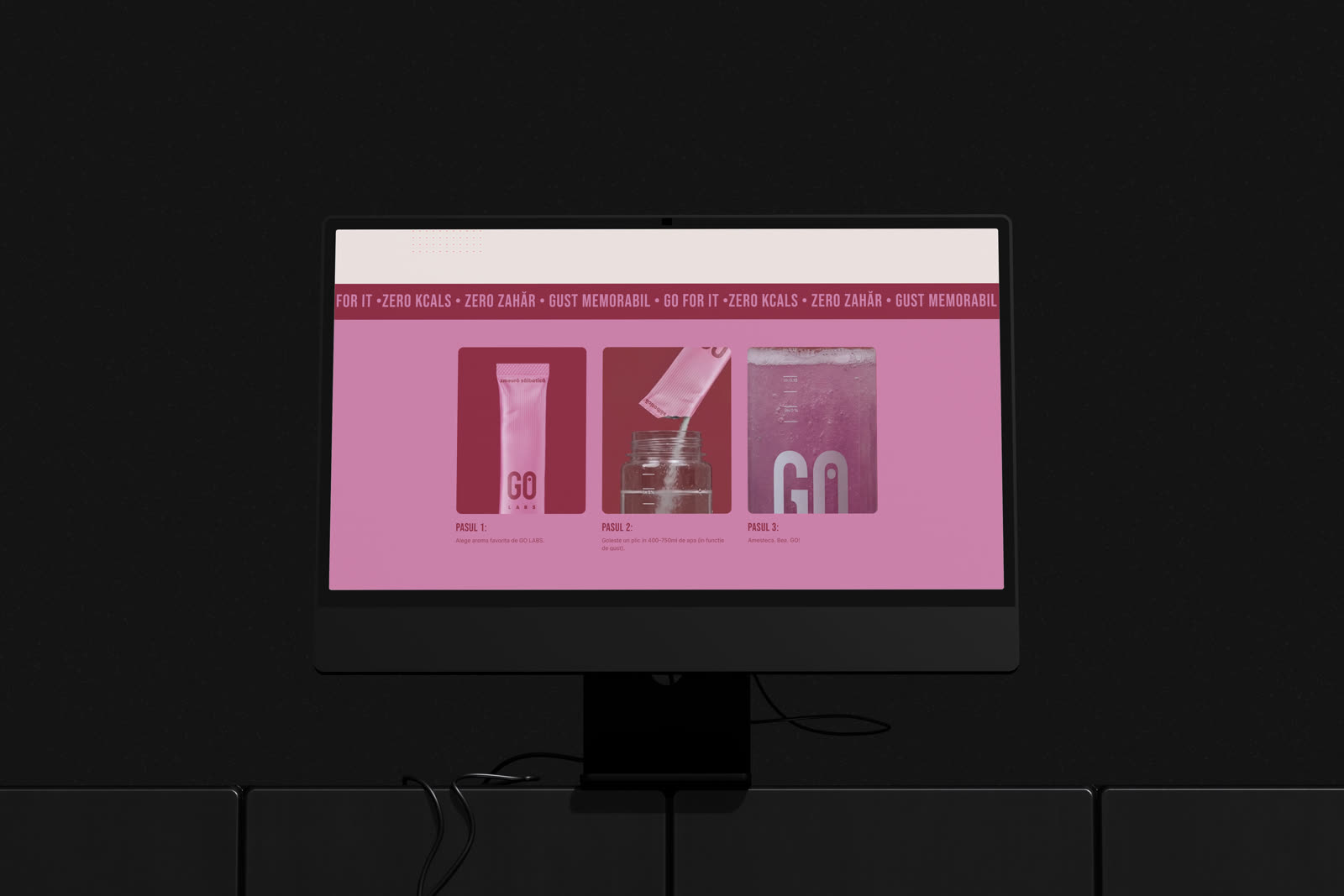
Three stores, three different problems. At Crama Rasova, the wine had to be seen before it could be sold. At GO Labs, the product and the packaging were built at the same time as the store. At Cărușor, the brand and the shop started from scratch, together.

Frequently asked questions
We build the price to measure, for each project separately. A catalogue of twenty products with a single shipping method, and one with variants, sizes, stock across warehouses and automatic invoicing, are two different amounts of work. After the first call you get a clear quote with everything it includes.
An online store usually takes between eight and twelve weeks. What stretches the timeline is not the design but the integrations: connecting to stock, to couriers, to invoicing. We give you the exact deadline after the first call, once we know what has to talk to what.
We write our own code, we do not mount a purchased theme. If you already use an inventory or invoicing system, we connect to it. If not, we build the admin panel from scratch, with exactly the fields you need and none extra.
The money goes straight into your account, at the processor you choose. We only make the technical connection between the store and the processor. We do not handle collections and we do not add a margin to anything you pay suppliers.
Yes, that is the point. We build the admin panel for you to use: products, prices, stock, photos, texts. At the end of the project we run a training session where we show you everything, and it stays recorded so whoever joins the team later can watch it too.
We can shoot them. We have product photography and video in-house, that is how we worked on GO Labs. If you already have good photos, we use yours. What we will not do is put stock images in place of your products, because it shows and it costs you sales.